One of the most common issue I discuss with Urban residents is the issue of flooding due to excess rainfall or spring melt.
To understand this better, consider that a common, unpaved parcel of land will shed off 32% of rainfall. If you pave the parcel, the runoff increases to 92%.***
In other words, you nearly triple the water running off of a paved parcel. This is why mitigating flood runoff is critical to ensuring your property is safe. Add to this, the reluctance of Insurance companies to issue flood coverage to homes which have been affected, or are in or near a flood-prone area, and you see how high a risk you are facing.
How do we mitigate this costly issue? How do we help our residents feel safe, feel that their investment is safe and reduce the considerable stress caused by groundwater flooding?
Think “Fanshawe Lake” (London)
Think “Guelph Lake” (Guelph)
These are only 2 examples of engineered stormwater runoff mitigation ponds (lakes). There are more comprehensive examples, but the two I mentioned will suffice.
A large stormwater runoff pond will serve to mitigate floodwater, and will also be a sanctuary for wildlife and water fowl, will be used as a recreational area for residents and to promote tourism, as well as serve as a study area for wildlife studies.
All pending and approved construction (developments) will be required to link their storm drains into the reservoir. Yes, there will be increased costs, but the relief to our community and benefits will abound.
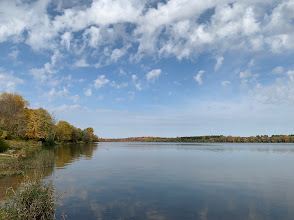
An image of Fanshawe Lake (London)